
Essendon Private Clinic
Private Inpatient Mental Health Care in Melbourne
When mental health is making daily life difficult, a planned hospital stay can provide structure and space to focus on recovery.
Essendon Private Clinic is a private mental health hospital in Essendon West, Melbourne, offering planned inpatient mental health admissions. Our Intake Team can explain referral, assessment, funding and admission requirements and discuss whether EPC may be an appropriate option.
Returning to EPC? Request a call back →
Whole-Person Recovery
Care guided by our ESSENTIAL, EMPOWERED and ENGAGED model.
24/7 Nursing Support
Nursing staff onsite day and night.
Daily Therapeutic Groups
Structured skills and psychoeducation.
Recovery and Discharge Planning
Goals and next steps beyond hospital.
WHERE OUTPATIENT IS NO LONGER ENOUGH
Could Inpatient Mental Health Care Help?
A planned hospital stay may be worth discussing when depression, anxiety or other mental health symptoms are significantly affecting your wellbeing, sleep, routines, relationships, work or study.
- More support than outpatient appointments can currently provide
- Psychiatric assessment, medication review or closer monitoring
- A daily therapeutic program and supported environment
- Relapse or deterioration where earlier support may help

Conditions and Complex Needs EPC May Support
Depression and other mood disorders · anxiety and panic · trauma-related conditions · bipolar disorder · obsessive compulsive disorder · emotion-regulation difficulties · neurodivergent people · mental health needs alongside alcohol or other drug concerns.
EPC'S MODEL OF CARE
Whole-Person Recovery
EPC’s Whole-Person Recovery Model is built around three connected pillars — ESSENTIAL, EMPOWERED and ENGAGED.
Whole-person care looks beyond symptoms alone. It considers the psychological, physical, relational, social, behavioural and environmental factors that may affect recovery, and supports you to build the skills, stability, confidence and connections needed for life beyond your hospital stay.
ESSENTIAL
Build Safety & Stability
We help you navigate intense emotions and stay safe. This is about coping in the moment, building stability and creating the foundation for recovery.
THIS MAY INCLUDE
- Crisis survival and distress tolerance
- Grounding and mindfulness
- Sleep and fatigue management
- Understanding stress, trauma and the brain
- Safety, relapse prevention and help-seeking
ESSENTIAL groups answer: "What do I need to get through this safely?"
EMPOWERED
Understand Your Emotions
We help you understand your emotions, thoughts and behaviours so you can respond in ways that support your values and wellbeing.
THIS MAY INCLUDE
- Emotion awareness and regulation
- Healthy thinking patterns
- Self-compassion and self-acceptance
- Values, resilience and hope
- Behavioural activation and goal setting
EMPOWERED groups answer: "How can I understand myself and develop the skills to move forward?"
ENGAGED
Connect With What Matters
We help you reconnect with people, purpose and the things that matter most so you can build a fulfilling, connected and meaningful life.
THIS MAY INCLUDE
- Healthy communication
- Relationship skills
- Boundaries and conflict resolution
- Occupational and vocational wellness
- Community participation and recovery
ENGAGED groups answer: "How do I reconnect with my life and the people and the roles that matter to me?"
Dialectical Behaviour Therapy (DBT) and Cognitive Behaviour Therapy (CBT) are evidence-based approaches used to build practical skills for managing emotions, coping with distress and changing unhelpful patterns of thinking and behaviour.
Our multidisciplinary allied health team draws on each pillar according to your individual needs, strengths and stage of recovery.
FULLY SUPPORTED, DAY AND NIGHT
What Your Inpatient Care and Stay May Include
These elements of care work together within our ESSENTIAL, EMPOWERED and ENGAGED Whole Person Recovery Framework. At EPC, inpatient care is shaped around your needs, strengths, goals and stage of recovery.
1
Psychiatric Assessment and Inpatient Treatment
Assessment, medication review and treatment planning.
2
24/7 Nursing Support
Clinical support and monitoring, day and night.
3
Daily Therapeutic Groups
Psychoeducation, recovery skills and wellbeing.
4
Recovery and Discharge Planning
Goals, practical supports, follow-up and relapse prevention.
A Structured Daily Rhythm
The three pillars are reflected in EPC’s daily therapeutic program, helping connect the Whole-Person Recovery Model with the skills and topics you may explore during your admission.
- Acceptance and self-soothing techniques
- Safety planning and relapse-prevention strategies
- Building healthy routines and physical wellbeing
- Behavioural activation and goal setting
- Self-compassion, identity and self-esteem
- Values and emotional awareness
- Assertiveness and conflict-resolution skills
- Family and work balance
- Community participation, recreation and vocational recovery
A Structured Daily Rhythm
The three pillars are reflected in EPC’s daily therapeutic program, helping connect the Whole-Person Recovery Model with the skills and topics you may explore during your admission.
- Acceptance and self-soothing techniques
- Safety planning and relapse-prevention strategies
- Building healthy routines and physical wellbeing
- Behavioural activation and goal setting
- Self-compassion, identity and self-esteem
- Values clarification and emotional awareness
- Assertiveness and conflict-resolution skills
Family dynamics and occupational balance
Community participation, recreation and vocational recovery
How long might I stay?
Many EPC admissions may be around 14 to 21 days, but length varies. Your treating team will discuss the expected stay based on your needs, progress and care plan.
ONE CONNECTED TEAM
Inpatient Care With One Multidisciplinary Team
Comprehensive psychiatric assessment forms the foundation of every admission. Your psychiatrist works with nurses, psychologists and allied health professionals so care, groups, goals and discharge planning are connected.
Psychology
Psychological assessment, formulation and evidence-based individual and group interventions to support recovery, emotional regulation, coping and behavioural change.
Occupational Therapy
Assessment and intervention focused on everyday functioning, routines, meaningful activity, sensory and environmental needs, occupational participation and developing skills for life beyond hospital.
Social Work
Support with relationships, family and social circumstances, practical and psychosocial needs, community connections, advocacy and discharge planning.
Therapeutic Programs
Structured therapeutic groups and psychoeducation drawing on evidence-based approaches including DBT, ACT, CBT and other recovery-focused interventions.
COMMON QUESTIONS
Referral, Private Health and Admission
If you are considering a planned mental health admission, you can contact intake before you have every detail organised.
Do I need a referral?
A GP or psychiatrist referral is generally required. Intake can explain the pathway if you do not have an admitting psychiatrist.
What will it cost?
Cover and out-of-pocket costs vary. Intake can explain what information is needed; confirm benefits with your health fund.
How soon could I be admitted?
Timing depends on assessment, an admitting psychiatrist, service capability and bed availability. A date cannot be guaranteed.
Family and carer enquiries are welcome.
FOR PSYCHIATRISTS AND GPS
Refer a Patient to Essendon Private Clinic
EPC welcomes referrals for our inpatient mental health care. If your patient may benefit from a structured hospital admission, our Intake Team can review the referral, discuss the appropriate pathway and coordinate the next steps.
2
Intake Review
Our Intake Team reviews the referral and may contact you or the patient for more information.
3
Plan Admission
If suitable, we coordinate the next steps for admission, including timing and funding.
What to Include in Your Referral
- Patient details
- Referrer details
- Insurance / funding details
- Presenting issues
- Current treatment
- Relevant history and risks
- Goals and treatment needs
Need to Discuss a Patient?
Our Intake Team can help with referral requirements, inpatient suitability and the next steps for planned admission.
INSIDE ESSENDON PRIVATE CLINIC
Private Mental Health Hospital Care in Essendon West, Melbourne
Located in Essendon West, Essendon Private Clinic provides planned inpatient mental health care in a private hospital setting for people across Melbourne’s inner north-west, including Moonee Ponds, Avondale Heights, Niddrie, Airport West, Keilor, Flemington, Ascot Vale and Footscray. During an admission, patients have access to 24/7 nursing support, structured therapeutic groups and multidisciplinary mental health care, with recovery and discharge planning incorporated throughout their stay.
Essendon Private Clinic is accredited under recognised national healthcare and mental health standards, supporting a focus on safe, quality care.
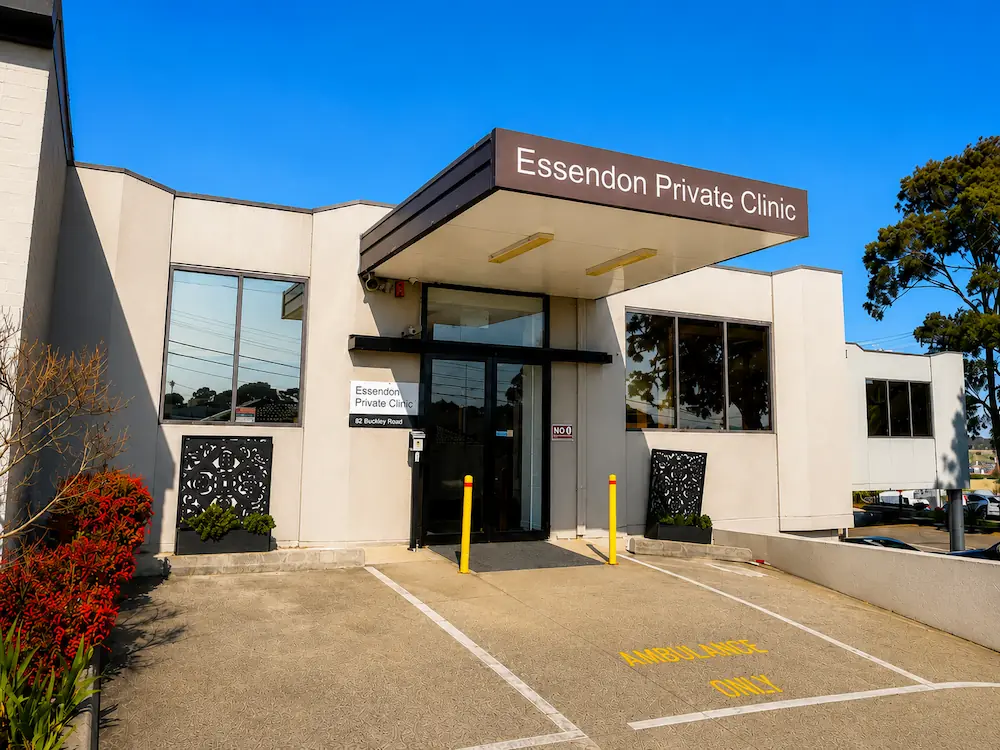
Essendon West location

Welcoming reception

Therapy and group spaces

Inpatient lounge
ADMISSION, REFERRAL AND FUNDING
How to Enquire About Admission
Contact intake for yourself, someone you care about or as a referring clinician. You do not need every detail organised before the first conversation.
1
Contact intake
Use the contact form, phone or email.
2
Discuss referral, funding and suitability
The team explains likely information and clinical review steps.
3
Plan the admission
If suitable, discuss timing, preparation and expected costs.
Talk to intake about admission
Phone: (03) 7056 7200
Email: [email protected]
Private Health Insurance and Costs
Hospital cover, excesses and out-of-pocket costs vary. Intake can explain what information is needed; confirm benefits and possible costs with your health fund before admission. DVA, TAC or WorkCover arrangements may apply in some circumstances.
QUESTIONS ABOUT INPATIENT CARE
Frequently Asked Questions
Where is Essendon Private Clinic located?
Essendon Private Clinic is a private mental health hospital located at 35 Rosehill Road, Essendon West VIC 3040, supporting patients and families across Melbourne’s inner north-west.
What are DBT and CBT?
Dialectical Behaviour Therapy (DBT) and Cognitive Behaviour Therapy (CBT) are evidence-based psychological approaches used within mental health treatment.
DBT focuses on building practical skills to help manage distress, regulate emotions and improve relationships. CBT helps people recognise unhelpful patterns of thinking and behaviour and develop healthier ways of responding.
At EPC, elements of these approaches may be explored within therapeutic groups and individual care depending on your needs and treatment plan.
What is Essendon Private Clinic’s Whole-Person Recovery Model?
EPC’s Whole-Person Recovery Model is the shared framework that guides care throughout your admission. It recognises that mental health and recovery can be influenced by biological, psychological, social, behavioural, spiritual and environmental factors — and that recovery involves more than symptom relief alone.
The model is built around three connected pillars:
Essential — managing distress and discomfort
Empowered — growing to appreciate and regulate emotions
Engaged — connecting with people and what matters most
These pillars help guide psychiatric care, nursing support, therapeutic groups, allied health input, recovery planning and discharge preparation.
Our multidisciplinary team draws on each pillar according to your individual needs, strengths and stage of recovery, with the aim of helping you build practical skills, confidence, connection and greater participation in your own recovery journey.
What is private inpatient mental health care?
Private inpatient mental health care involves a planned hospital stay with clinical support, therapeutic groups and recovery planning. It may be considered for people experiencing depression, anxiety and other mental health conditions when more intensive support is clinically appropriate. At EPC, suitability is based on clinical assessment, service capability, funding and the availability of an admitting psychiatrist.
Do I need a referral?
A GP or psychiatrist referral is generally required. Contact intake if you do not have an admitting psychiatrist.
Will private health insurance cover my stay?
Cover and costs depend on your insurer, policy, excess and clinical/funding arrangements. Confirm benefits before admission.
How soon could I be admitted, and is a bed available?
Timing depends on clinical assessment, an admitting psychiatrist, service capability and bed availability. A date cannot be guaranteed.
Can a family member or carer enquire for me?
Yes. A family member or carer can contact intake to ask about options and next steps. EPC still protects your privacy and shares information only in line with consent and legal requirements.
How long is an inpatient stay?
Many EPC admissions may be around 14 to 21 days, but length varies. Your treating psychiatrist will discuss the expected stay based on your needs, progress and care plan.
What does 24/7 nursing support mean?
Nursing staff are onsite day and night to provide clinical care and support. Therapeutic groups run to the daily program; 24/7 nursing does not mean therapy sessions occur around the clock.
Will I see a psychiatrist?
Comprehensive psychiatric assessment is a foundation of admission. Your admitting psychiatrist guides treatment and works with the multidisciplinary team; review frequency depends on your needs.
What happens after I leave hospital?
Your team works with you on discharge and relapse-prevention planning, which may include follow-up with your psychiatrist or GP, community support, an EPC outpatient program or a TMS pathway where clinically appropriate.
How do I get admitted to a private mental health hospital in Melbourne?
A planned private mental health admission generally starts by contacting the intake team. A GP or psychiatrist referral is usually required, and your clinical needs are reviewed to assess suitability and identify an admitting psychiatrist where needed. If admission is suitable, the team can then discuss private health or other funding requirements, timing, preparation and bed availability. Admission is subject to clinical assessment, an admitting psychiatrist, service capability and bed availability.
What is the difference between inpatient and outpatient mental health care?
Inpatient mental health care involves staying in hospital for a period of structured treatment and support. At EPC, this may include psychiatrist-led treatment, 24/7 nursing support, daily therapeutic groups, allied health input and recovery and discharge planning. Outpatient care does not involve an inpatient hospital stay and may include ongoing care with your psychiatrist or GP, EPC day programs or other follow-up supports where clinically appropriate.
YOU DO NOT NEED EVERY ANSWER BEFORE YOU CALL
Talk to Intake About Admission
Complete this short form and the intake team can explain the referral, assessment, funding and next steps for a planned admission.